India’s Micro, Small, and Medium Enterprises (MSMEs) have long struggled with delayed payments, especially when dealing with government buyers. The traditional “30-day payment cycle” often stretched to 60 or even 90 days, impacting cash flow, working capital management, and business growth. However, with the introduction of TReDS GeM Integration, the landscape of MSME financing and invoice discounting is undergoing a massive transformation.
This integration between the Trade Receivables Discounting System (TReDS) and the Government e-Marketplace (GeM) aims to streamline payments, reduce delays, and provide instant liquidity to small businesses. As digital platforms reshape India’s procurement ecosystem, this move is a major step toward strengthening the MSME sector.
In this blog, we’ll explore how TReDS GeM Integration works, its benefits, impact on MSMEs, and why it marks the end of long payment waiting cycles.
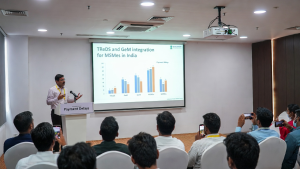
The Trade Receivables Discounting System (TReDS) is an electronic platform introduced by the Reserve Bank of India (RBI) to facilitate the financing of trade receivables for MSMEs. It allows small businesses to upload invoices and get them financed by banks and NBFCs through a transparent bidding system.
For MSMEs, access to working capital is crucial. Delayed payments can disrupt operations, delay salaries, and hinder expansion. TReDS solves this problem by converting receivables into immediate cash, improving liquidity and reducing dependency on traditional loans.
With the integration of digital procurement platforms like GeM, the role of TReDS in MSME financing becomes even more powerful and efficient.
The Government e-Marketplace (GeM) is an online platform designed to facilitate procurement of goods and services by government departments, PSUs, and organizations. It ensures transparency, efficiency, and ease of doing business for sellers.
GeM has significantly simplified how MSMEs interact with government buyers. However, while procurement became easier, payment delays still remained a challenge. This is where TReDS GeM Integration bridges the gap.
By linking GeM with TReDS, the government ensures that invoices generated on GeM can be directly financed through TReDS platforms, reducing payment cycles and improving cash flow for MSMEs.
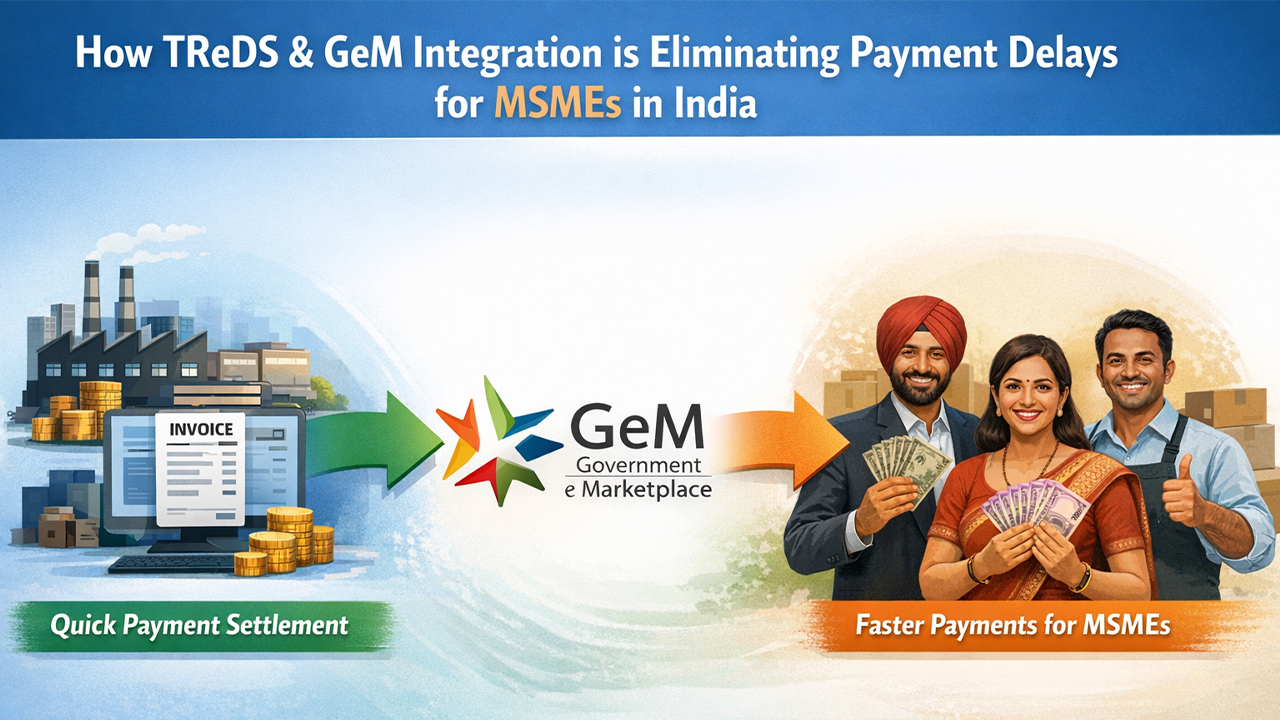
The TReDS GeM Integration connects procurement and financing seamlessly. Once a seller supplies goods or services through GeM and generates an invoice, that invoice can be automatically pushed to a TReDS platform.
Here’s how the process works:
MSME seller completes an order on GeM
Invoice is generated and approved by the buyer
Invoice is uploaded to TReDS
Multiple financiers bid to discount the invoice
MSME receives instant payment
This integration removes manual intervention, reduces paperwork, and speeds up the entire financing cycle. It also ensures transparency and trust between buyers, sellers, and financiers.
Traditionally, MSMEs had to wait for 30 days or more to receive payments from government buyers. In many cases, delays extended beyond agreed timelines, causing financial stress.
With TReDS GeM Integration, this waiting period is effectively eliminated. MSMEs can now receive payments within a few days through invoice discounting. This shift is crucial for improving liquidity and enabling businesses to operate smoothly.
The integration ensures that approved invoices are quickly converted into cash, reducing dependency on delayed payments and improving overall financial stability.
Cash flow is the lifeline of any business. With faster payments through TReDS, MSMEs can manage their working capital more efficiently. This reduces the need for high-interest loans and improves financial health.
The integration minimizes delays by automating the invoice financing process. Since invoices are digitally verified and approved, the chances of disputes and delays are significantly reduced.
TReDS platforms allow multiple financiers to bid on invoices. This competitive environment ensures that MSMEs get better discounting rates, making financing more affordable.
Both GeM and TReDS are digital platforms, ensuring transparency at every step. MSMEs can track invoice status, financing bids, and payments in real-time.
By improving liquidity and reducing financial stress, TReDS GeM Integration strengthens the overall MSME ecosystem. It enables businesses to grow, hire more employees, and contribute to economic development.
The MSME sector contributes significantly to India’s GDP and employment. However, payment delays have always been a major bottleneck.
With TReDS GeM Integration, the government is addressing this issue at a systemic level. Faster payments mean increased productivity, better business confidence, and higher economic growth.
This initiative also aligns with the government’s vision of Digital India and Ease of Doing Business, making India a more attractive destination for entrepreneurs and investors.
While the integration offers numerous benefits, there are still some challenges that need to be addressed:
Awareness among MSMEs about TReDS platforms
Limited adoption by some buyers and departments
Technical integration issues in initial stages
Need for digital literacy among small business owners
Addressing these challenges will be crucial for maximizing the impact of this initiative.
The future of MSME financing lies in digital platforms and data-driven solutions. With advancements in fintech, AI, and blockchain, systems like TReDS will become even more efficient.
The success of TReDS GeM Integration could pave the way for similar integrations across private sector platforms, further improving access to finance for MSMEs.
In the coming years, we can expect:
Faster approval processes
Lower financing costs
Greater adoption of digital platforms
Enhanced financial inclusion
For MSMEs, adopting this integration is not just an option—it’s a necessity. In today’s competitive business environment, having access to quick liquidity can make a huge difference.
By leveraging TReDS GeM Integration, businesses can:
Avoid cash flow issues
Scale operations faster
Build stronger relationships with buyers
Improve financial stability
Early adoption will give MSMEs a competitive advantage and position them for long-term success.
The integration of TReDS with GeM marks a significant milestone in India’s journey toward digital transformation and economic growth. By eliminating payment delays and improving access to finance, this initiative is empowering MSMEs like never before.
TReDS GeM Integration is not just a technological upgrade—it’s a structural reform that addresses one of the biggest challenges faced by small businesses. As adoption increases, it has the potential to completely transform the MSME landscape in India.
For entrepreneurs, startups, and small business owners, this is the perfect time to embrace this change and unlock new growth opportunities.