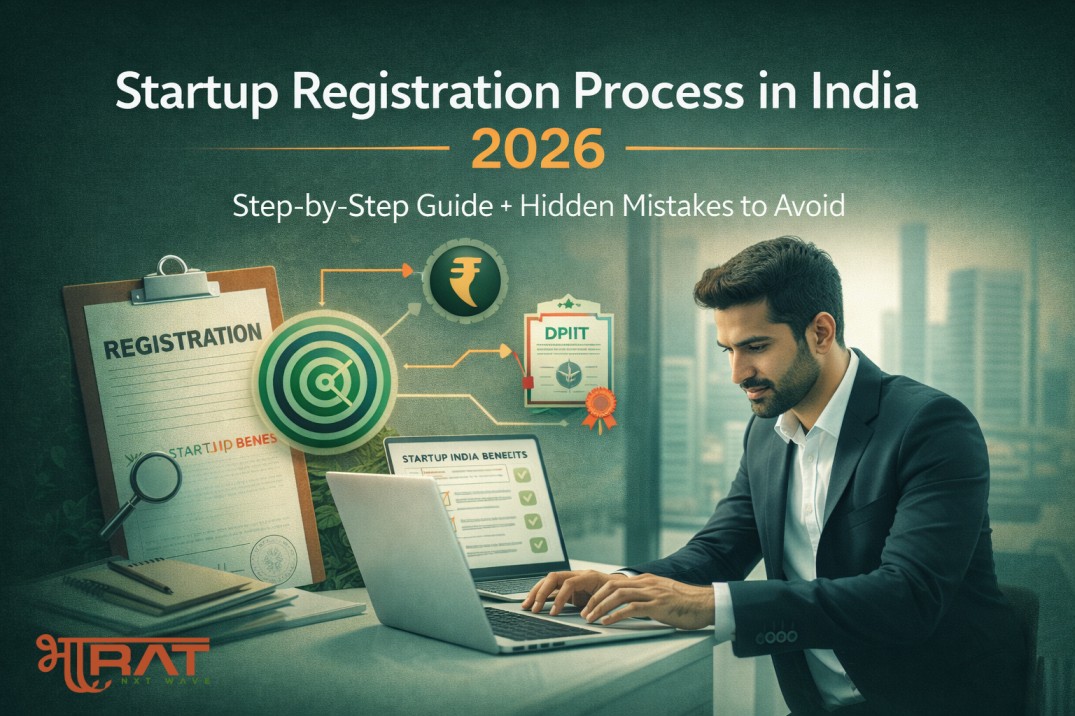
The startup registration process in India 2026 is more structured, digital, and opportunity-driven than ever before. With the Startup India initiative entering its second decade, founders now have access to faster incorporation, DPIIT recognition, MSME benefits, and government funding pathways. Yet, despite these advancements, thousands of startups still face delays, rejections, and compliance bottlenecks due to avoidable mistakes.
In 2026, registration is no longer just about getting a company name approved. It is about building a compliance-ready, funding-ready, and scalable business foundation. Understanding the complete startup registration process in India 2026 helps founders avoid hidden pitfalls that can quietly block growth, funding, and institutional trust.
This guide walks you step-by-step through the modern startup registration process in India 2026, highlights common mistakes founders make, and explains how to align registration with long-term growth goals.
The startup ecosystem in India has matured significantly. Investors, banks, and government agencies now expect startups to demonstrate regulatory discipline, governance clarity, and financial transparency from day one.
In 2026, startup registration serves multiple strategic purposes:
The startup registration process in India 2026 is therefore not just a legal formality—it is a growth strategy.
Selecting the correct legal structure is the first and most critical decision in the startup registration process in India 2026.
Common structures include:
For startups planning to raise funding or apply for government schemes, the Private Limited Company structure offers the best scalability and investor acceptance.
Digital Signature Certificates are mandatory for online filings with the Ministry of Corporate Affairs (MCA). All directors and authorised signatories must obtain DSCs before proceeding further in the startup registration process in India 2026.
Every director must have a DIN issued by the MCA. This identification number remains valid for a lifetime and is essential for corporate compliance.
Founders must apply for name approval through the RUN or SPICe+ form. The proposed name should:
Name rejections delay the startup registration process in India 2026 and can derail launch timelines.
The Memorandum of Association (MOA) and Articles of Association (AOA) define the company’s objectives, governance rules, and operational scope. Poorly drafted documents create future compliance and funding issues.
The SPICe+ form integrates multiple registrations, including:
This consolidated filing has streamlined the startup registration process in India 2026 significantly.
Once approved, the Registrar of Companies issues the Certificate of Incorporation, officially recognising the startup as a legal entity.
After incorporation, founders should apply for DPIIT recognition under the Startup India initiative.
The official Startup India portal governs DPIIT recognition: https://www.startupindia.gov.in
DPIIT certification transforms basic registration into a growth-enabling framework.
Many startups qualify as MSMEs under India’s classification framework.
The Ministry of MSME governs MSME registration: https://msme.gov.in
MSME certification strengthens a startup’s financial credibility and funding access.
Compliance is no longer optional in the startup registration process in India 2026.
The Ministry of Corporate Affairs governs corporate compliance: https://www.mca.gov.in
Non-compliance blocks funding, delays grants, and weakens institutional trust.
The modern startup registration process in India 2026 is tightly integrated with government schemes.
Startups that align registration with scheme readiness unlock faster funding opportunities.
Selecting an unsuitable structure blocks funding and government scheme access.
Many founders stop at incorporation and miss critical benefits.
Missing filings and incorrect registrations silently damage credibility.
Inconsistent financial records and governance gaps delay funding.
Failing to leverage MSME frameworks limits loan eligibility.
The startup registration process in India 2026 must be aligned with funding readiness.
Investors and government schemes evaluate:
Registration without funding readiness leads to repeated rejections.
Technology adoption is now embedded in registration and compliance.
Digital tools enable:
Digital readiness accelerates scale and improves institutional trust.
Professional advisory has become an essential growth accelerator.
From incorporation and DPIIT recognition to MSME certification and funding readiness, expert guidance reduces founder risk.
BharatNXT Wave supports startups with complete registration and incorporation services, ensuring founders start right. Explore registration services here: https://bharatnxtwave.com/services/
Our advisory team also helps startups apply for MSME loans and government schemes, aligning registration with funding readiness. Learn more here: https://bharatnxtwave.com/services/msme-loans/
The startup registration process in India 2026 is only the beginning.
True growth requires:
Startups that treat registration as a starting point—not a finish line—scale faster.
The modern startup registration process in India 2026 is no longer just a legal formality. It is a strategic foundation for funding, growth, and institutional trust.
From choosing the right business structure and obtaining DPIIT recognition to MSME registration and compliance readiness, every step matters.
Founders who approach registration with long-term vision gain a decisive advantage in India’s competitive startup ecosystem.
With the right guidance, documentation discipline, and strategic alignment, the startup registration process in India 2026 can become the launchpad for scalable success.
Growth begins where structure meets strategy.