If you look closely at how businesses are evolving in India, you will notice one major shift: MSMEs across Bharat are adopting technology faster than ever before. Fintech has quietly become the backbone of India’s new-age entrepreneurship wave, especially among young founders who are entering the business world with confidence.
Today, India is one of the world’s fastest-growing startup hubs. What used to be limited to metros like Bengaluru or Mumbai is now flourishing in smaller towns, tier-2 cities, and rural regions. Digital tools, online registrations, startup schemes, and simplified financial products have completely changed the way entrepreneurs operate.
While India’s MSME sector has always been the backbone of the economy, contributing nearly a third of the GDP and half of India’s exports, this is the first time it is receiving strong digital support. And the biggest catalyst behind this transformation is fintech.
In this detailed guide, let’s explore how new-age financial technology is empowering MSMEs to grow faster, smarter, and more efficiently in 2025 and beyond.
India has crossed more than one lakh officially recognized startups, making it the third-largest startup ecosystem globally. But an even more important trend is happening elsewhere: entrepreneurship is booming in tier-2 and tier-3 Bharat.
What’s driving this rise?
Easy access to digital financial tools
Simplified online business registration
Widespread digital payments adoption
Affordable internet and smartphones
Government support for small businesses
Increased interest among young Indians to become entrepreneurs
This shift has directly influenced the MSME ecosystem. Young founders are launching businesses faster, using fintech tools from day one, and adopting digital payments as a default. The barriers that once stopped small businesses—like lack of funding or regional limitations—are disappearing.
A decade ago, the majority of Indian youth preferred stable corporate jobs. Today, the mindset has shifted dramatically. Young Indians now see entrepreneurship as a high-growth path.
Here are the major reasons behind this shift:
Greater freedom and independence
Fast career and income growth
Access to online learning and mentors
Easy-to-start business models
Government schemes for first-time entrepreneurs
Confidence created by digital transformation
This entrepreneurial mindset directly fuels the growth of MSMEs. Thousands of new small businesses are launched every day, and most of them need fast, simple, and scalable financial solutions.
That’s where fintech steps in.
Micro, small, and medium enterprises form the economic foundation of India. Their contribution is massive:
Around one-third of India’s GDP
Nearly 50% of export value
Over 110 million jobs
Significant share of industrial output
Despite such importance, MSMEs face multiple challenges like access to credit, delayed payments, lack of digital adoption, limited market reach, and compliance difficulties.
Fintech is solving these problems with technology-driven, easy-to-use, and affordable solutions.
Fintech is doing for MSMEs what smartphones did for communication. It is making finance simple, accessible, and instant.
Here are the major ways fintech is reshaping MSME growth.
Earlier, MSME owners had to visit banks repeatedly, submit multiple documents, and wait for weeks to get loan approvals. Today, new-age fintech lenders offer:
Fast digital KYC
Automated credit assessment
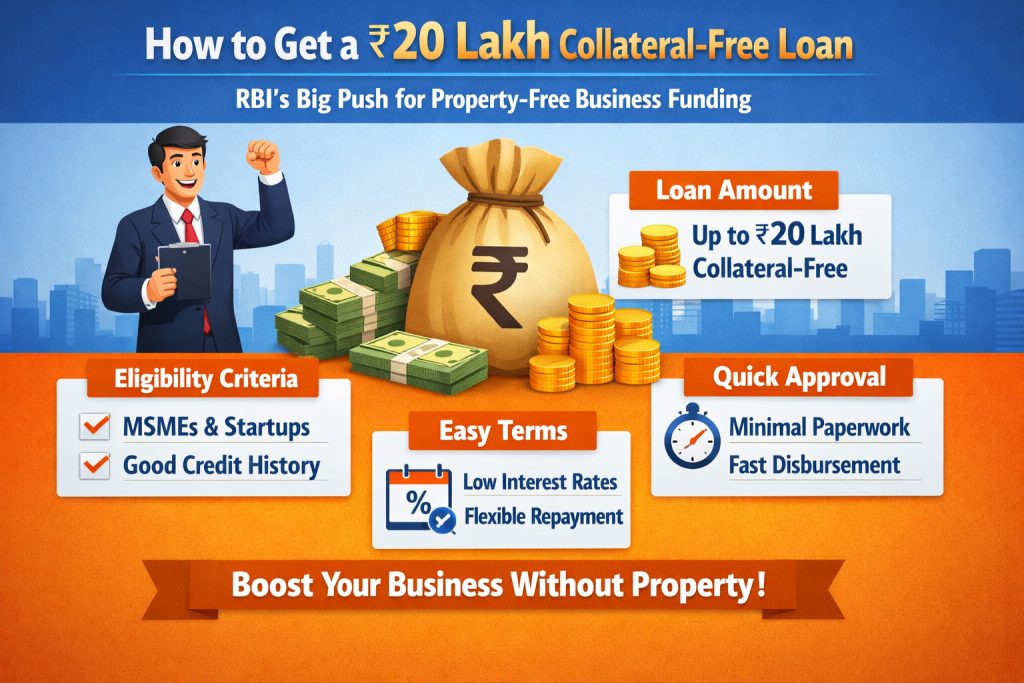
Zero-collateral loans
Paperless applications
24–48 hours approval
Popular fintech MSME loan providers include LendingKart, Razorpay Capital, Kinara Capital, Indifi, NeoGrowth, and more.
Government-backed schemes also integrate with digital systems, making loans easier to access.
To explore fast, collateral-free financing options for your business, you can check our MSME loan services designed specifically for small and growing enterprises.
UPI has completely changed how India transacts. Even a small shop in a remote village now accepts payments instantly. MSMEs using digital payments benefit from:
Faster cash flow
Transparent records
Better customer experience
Easy reconciliation
Digital payment solutions like PhonePe Business, Paytm Business, BharatPe, and Razorpay enable MSMEs to operate professionally without any additional infrastructure.
Manual bookkeeping is time-consuming and error-prone. Fintech-based accounting tools simplify this with features like:
GST-ready invoices
Real-time inventory updates
Automated tax calculations
Online payment integration
Audit-friendly reports
Popular tools include Zoho Books, Tally Prime, Vyapar App, and Busy Accounting Software.
If your business needs help with tax filings or GST registration, you can learn more about our GST compliance services that simplify the entire process.
Fintech and digital commerce tools make it easy for MSMEs to sell online. Platforms like ONDC, Shopify, Amazon Seller Central, and JioMart Digital allow businesses to reach customers across India without coding or technical expertise.
This is especially beneficial for:
Local manufacturers
Home-run businesses
D2C brands
Artisans
Food producers
Delayed payments have always been a major challenge for MSMEs. Many businesses operate on credit cycles of 60–120 days, which affects cash flow. Fintech supply chain platforms solve this by offering:
Invoice discounting
Vendor financing
Real-time settlement
Automated payment cycles
Platforms like KredX, M1xchange, and Priority Vendor are helping MSMEs maintain healthy financial flow.
The MSME registration process has become completely online through the Udyam Registration Portal.
Here is the simple step-by-step process:
Visit the official Udyam Registration website
Enter the Aadhaar number of the business owner
Verify the details using OTP
Add business information such as PAN, business name, type of enterprise, address, and NIC code
Declare the turnover and investment details
Submit the form
Receive the Udyam certificate instantly via email
Below is a curated list of tools that can help MSMEs streamline operations:
Payments
PhonePe Business
BharatPe
Razorpay
Accounting
Zoho Books
Vyapar App
Tally Prime
HR & Payroll
Zoho People
Kredily
CRM
HubSpot
Zoho CRM
Marketing
Google Business Profile
Meta Ads
Canva
E-commerce
ONDC
Shopify
WooCommerce
India has launched several programs to support MSMEs financially and operationally. Some key initiatives include:
MSME Samadhaan for delayed payments
MSME Champions for grievance redressal
RAMP Program for MSME modernization
TReDS platform for invoice discounting
Udyam Assist Platform for informal businesses
These initiatives are improving transparency, financing, and ease of doing business.
Access to credit
Solved by digital lending and alternative credit scoring
Payment delays
Solved by invoice discounting platforms
Compliance burden
Solved by GST and accounting automation tools
Limited customer reach
Solved by e-commerce and digital marketing
Low financial literacy
Solved by mobile-first fintech apps
Fintech simplifies every major pain point.
India’s MSME landscape is expected to undergo a remarkable transformation:
Over 25 crore digital-first MSMEs by 2030
More than 80% fintech adoption across industries
MSME contribution to GDP expected to rise from 30% to 35%
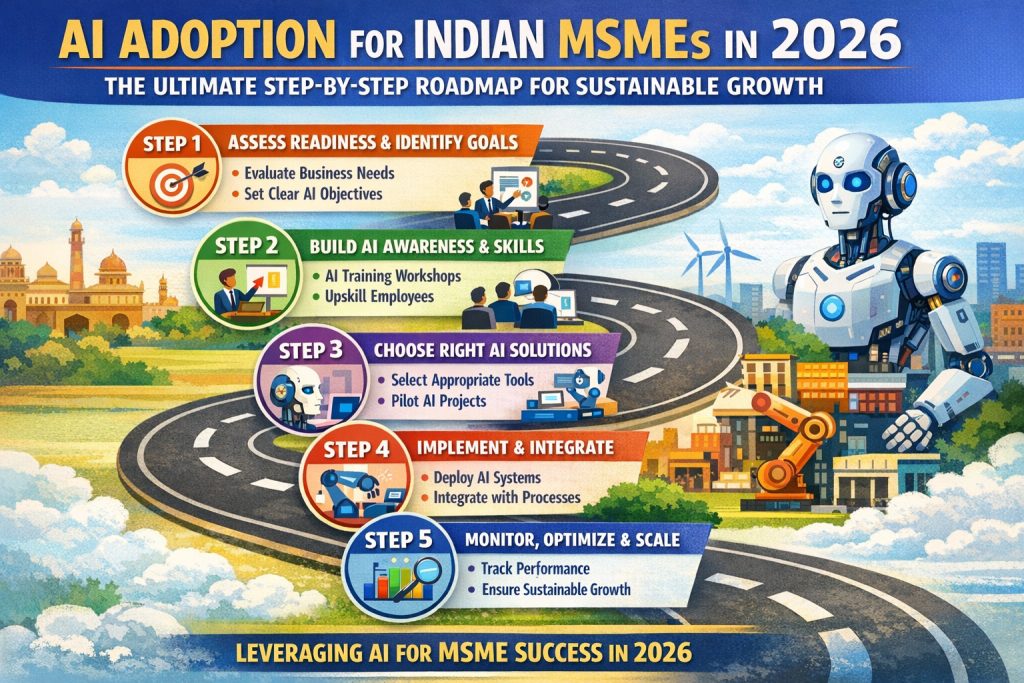
Widespread use of AI and automation tools
Strong growth from Tier-3 and rural regions
Fintech will play a major role in making MSMEs more competitive, efficient, and globally relevant.
Fintech is no longer just a technology trend. It has become the foundation on which modern MSMEs are built. From digital loans to UPI payments, from automated compliance to e-commerce enablement—fintech is unlocking opportunities that were inaccessible a few years ago.
For MSMEs in Bharat, this is the perfect time to embrace fintech, adopt digital tools, explore government schemes, and build scalable businesses. India’s economic future will be shaped by digitally empowered MSMEs, and fintech is the catalyst driving this revolution.