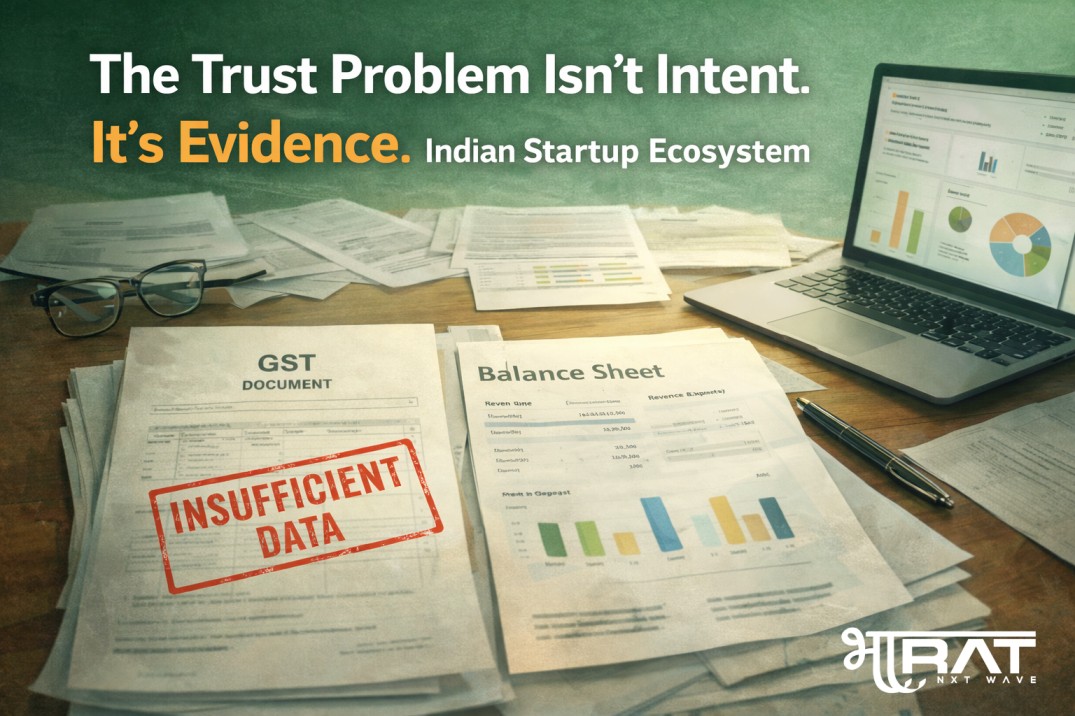
The Indian startup ecosystem has grown rapidly over the last decade, earning global attention for innovation, scale, and resilience. With thousands of new ventures emerging every year, India has positioned itself as one of the world’s largest startup hubs. Yet, despite this growth, a persistent and often overlooked issue continues to limit progress—lack of institutional trust.
Many founders ask the same question: If Indian startups are innovative and profitable, why do institutions hesitate to trust them? The answer lies deeper than balance sheets or pitch decks. It is rooted in systemic gaps across compliance, governance, financial transparency, and policy awareness.
Understanding why Indian startups struggle with institutional trust is essential for founders, investors, lenders, and policymakers shaping the future of entrepreneurship in India.
Institutional trust refers to the confidence that banks, investors, government bodies, and financial institutions place in a business. In the Indian startup ecosystem, trust determines access to funding, partnerships, grants, and long-term sustainability.
Unlike informal investors, institutions rely heavily on:
Regulatory compliance
Financial transparency
Governance structure
Risk mitigation frameworks
Startups often fail not because of poor ideas, but because they don’t meet institutional expectations.
The startup culture in India has evolved faster than institutional systems. While innovation and speed define startups, institutions prioritize stability, documentation, and predictability.
This mismatch creates friction. Indian startups move quickly, but institutions move cautiously—leading to delays, rejections, and trust gaps.
A major challenge in entrepreneurship in India is informality. Many founders:
Delay company incorporation
Avoid structured accounting
Operate without compliance planning
While this may reduce early costs, it severely damages credibility in the eyes of institutions.
👉Learn how structured compliance builds trust at
BharatNXT Wave – Company Registration & Compliance Services
https://bharatnxtwave.com/services/
Financial transparency is non-negotiable for institutions. However, many startups:
Mix personal and business finances
Under-report revenue
Lack audited financials
This makes it difficult for institutions to assess risk objectively within the Indian startup ecosystem.
Government regulations, while necessary, are complex. New founders often struggle with:
GST compliance
Income tax filings
ROC requirements
This compliance fatigue weakens trust and creates friction between startups and institutions.
👉Ministry of Corporate Affairs
https://www.mca.gov.in
India offers multiple startup support initiatives, but awareness remains low. Many founders are unaware of:
Startup India recognition
Seed funding schemes
Credit guarantee programs
This results in missed opportunities to strengthen institutional credibility.
👉 Startup India Portal
https://www.startupindia.gov.in
Institutions look beyond products—they evaluate leadership structure, decision-making frameworks, and accountability. Weak governance raises red flags even for high-growth startups.
Common governance issues include:
No board oversight
Unclear equity structures
Poor documentation
The startup vs job in India mindset still influences institutional thinking. Salaried individuals are viewed as low risk, while startups—despite growth—are considered uncertain.
This perception affects:
Credit approvals
Grant evaluations
Investment decisions
Changing this mindset requires systemic transparency and proof of sustainability.
Funding remains one of the biggest startup challenges in India. Institutions demand:
Clear revenue models
Legal compliance
Predictable cash flows
Without these, startups remain dependent on informal funding sources, further widening the trust gap.
Funding & Financial Advisory Support
https://bharatnxtwave.com/services/msme-loans/
Many startups operate as MSMEs, yet fail to leverage MSME benefits. Proper MSME registration improves:
Loan eligibility
Policy access
Institutional credibility
👉 MSME Registration & Advisory
https://bharatnxtwave.com/services/msme-registration/
Digital adoption improves trust. Institutions prefer startups that use:
Digital accounting software
GST-compliant billing
Online banking records
Digital maturity signals professionalism and reduces perceived risk in the Indian startup ecosystem.
As we move toward Indian startups 2025, institutional trust will become a deciding factor for survival. With tighter regulations and selective funding, only compliant and transparent startups will thrive.
The future of startups in India is promising, but only if trust gaps are addressed. Institutions are not anti-startup—they are risk-averse.
Startups that:
Invest in compliance
Maintain transparency
Adopt governance standards
will unlock sustainable growth and long-term partnerships.
These steps directly address challenges of entrepreneurship in India and improve institutional confidence.
The real reason startups struggle is not innovation—it’s trust readiness. The Indian startup ecosystem will continue to grow, but only those startups that align innovation with institutional expectations will succeed.
Trust is built through compliance, transparency, governance, and consistency—not just vision.
For Indian startups, the future belongs to those who understand that institutional trust is not a barrier, but a bridge to scale.